
What I learned raising hens through blizzards, summer heat, and the occasional curious coyote.
Large wood chicken coop
Out here we say, “Happy hens, quiet mornings.” A good large wood chicken coop is the main reason my birds stay healthy, calm, and laying strong eggs day after day. Over the years I have fixed, rebuilt, and cursed at more coops than I can count, and I’ve learned exactly what makes a big wooden coop work for real life, not just pretty pictures.
If you’re thinking about giving your flock more room, or you’re tired of flimsy little boxes that fall apart after one winter, let me walk you through what really matters before you put your money and your birds into a new home.
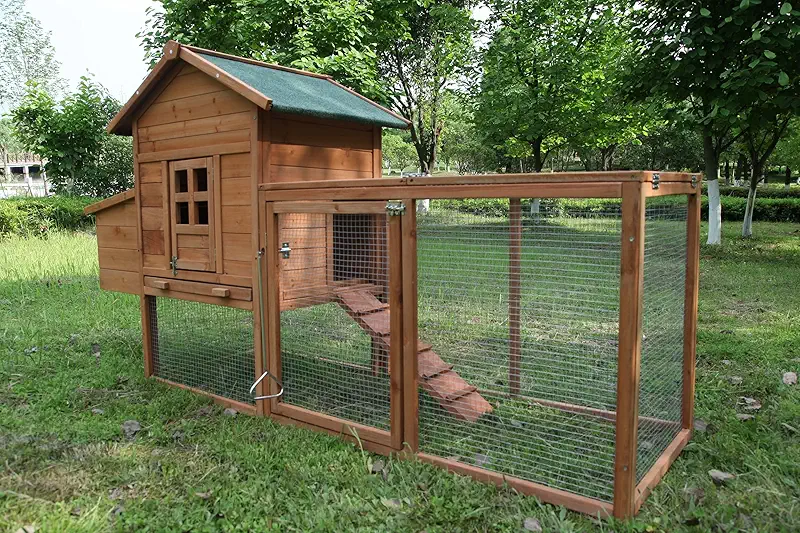
Why a large wood chicken coop is worth it
When I started, I squeezed eight hens into a tiny little coop that some catalog promised would hold “up to 10 chickens.” Maybe 10 very polite chickens that never move. In real life, my girls argued every night, pooped everywhere, and the smell… let’s just say my wife threatened to move out before the hens did.
Then I built my first proper large wood chicken coop. It changed everything. Birds spread out. Egg laying picked up. Smell dropped. And I didn’t have to crawl in on my knees like some kind of oversized raccoon just to collect eggs.
Space that really fits your flock
Numbers you see online are often “best case fairy tale.” Here is what has actually worked on my farm:
- Inside the coop: aim for 4 square feet per standard hen.
- Run or outdoor area: 8–10 square feet per hen.
- Roosting bar: at least 8–10 inches per hen, more if they are big breeds.
If you’re between sizes, go bigger. I have never heard a farmer say, “Darn, I gave my hens too much space.” But I’ve heard plenty say, “I should’ve gone one size up.” A large wood chicken coop gives breathing room now and space to add a few more birds later. Because you will. We all do. Chickens are potato chips with feathers.
Wood vs other materials: what my birds taught me
I’ve tried plastic, metal, and wood coops. Chickens never filled out a survey, but their behavior sure did the talking.
| Coop type | What I noticed | Best for |
|---|---|---|
| Large wood chicken coop | Stays warmer in winter, cooler in summer, easy to fix, feels “natural” to the flock. | Backyard and small farms wanting long-term housing. |
| Plastic coop | Easy to hose off, but can get hot and brittle over time in real weather. | Very small hobby flocks, mild climates. |
| Metal coop | Strong but turns into an oven in the sun and a freezer in winter. | Short-term or covered barn setups. |
A good thick-walled wooden coop breathes a bit. It doesn’t sweat like metal or warp like thin plastic when the wind and sun chew on it. And when something cracks, I fix it with a few boards and screws instead of hunting down some special part.
Must-have features in a large wood chicken coop
Fancy windows and cute trim are nice, but your hens care about three things: staying dry, staying safe, and staying comfortable. Here’s what I look for when I check a large wood chicken coop, whether I’m building it or picking one out online.
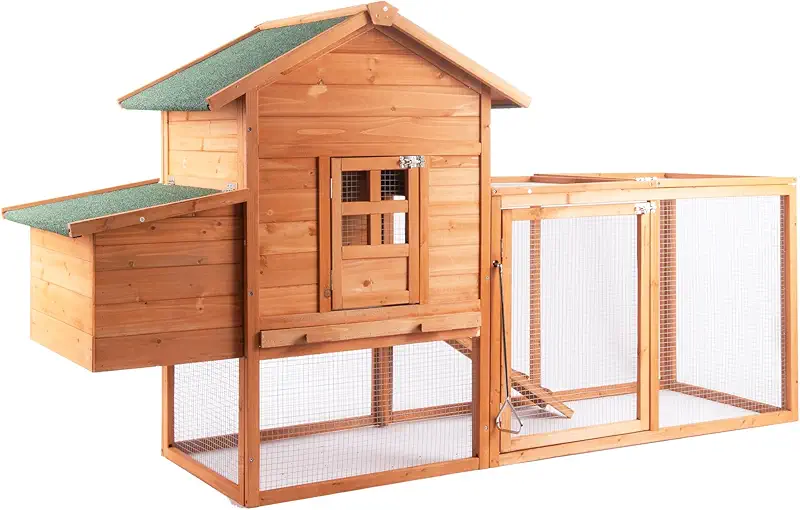
1. Solid frame and floor
I once tried saving money with a light little coop. First strong wind, it leaned like an old drunk uncle at a wedding. Not again.
- Look for sturdy framing, not just thin panels slapped together.
- Pressure-treated legs or good ground clearance to keep the floor off wet soil.
- Floor strong enough that you can stand inside without bending or creaking.
2. Ventilation without drafts
People worry more about cold than about damp air, but damp kills faster. Chickens breathe out a lot of moisture, and that moisture plus cold gives you frosty combs and respiratory problems.
- Look for vents up high, close to the roof, not at chicken level.
- Windows or vents covered with hardware cloth, not just chicken wire.
- Ability to close some vents during sideways rain but still let air move.

3. Nesting boxes that hens really use
I’ve seen coops with nests so tiny my bigger hens looked like they were trying to fit into a shoebox. That leads to broken eggs and grumpy chickens. I like:
- At least one nest box for every 3–4 hens.
- Boxes about 12" x 12" for standard breeds, a bit bigger for heavy girls.
- Slanted or hinged roof on the nest area so rain runs off and you can collect eggs easily.

4. Comfortable roosts
At night, chickens want to get up off the floor. That keeps them away from drafts and damp litter. Good roosts:
- Use a flat edge about 1.5–2 inches wide, not a skinny round dowel.
- Are higher than the nest boxes so birds don’t sleep in the nests.
- Have enough space between bars so no one gets pooped on from above.

5. Easy cleaning (your back will thank you)
A pretty coop is nice on day one. By day thirty, what matters is whether you can clean it without crawling inside like you’re exploring a cave.
- Large access doors for both the coop and the run.
- Removable tray or at least a smooth floor, no deep cracks for droppings.
- Good height, so you can reach all corners with a scraper or shovel.

Predator protection: what’s really “safe enough”
Out here we have foxes, raccoons, hawks, stray dogs, and the occasional predator I can’t even name. If there’s one lesson I learned the hard way, it’s this: if a predator can test your coop, it will. Once they succeed, they’ll be back every night like they paid rent.
Stronger than chicken wire
Chicken wire is made to keep chickens in, not predators out. Their teeth and claws go right through it. On my own large wood chicken coop setups, I use:
- Hardware cloth (welded wire), 1/2" openings, around the run and vents.
- Secure latches with carabiners or locks on every door and hatch.
- Buried wire or a skirt around the run to stop digging.

The nighttime test
After you set up any large wood chicken coop, I suggest this little ritual I do: once it’s dark and everyone’s inside, walk around the coop with a flashlight.
- Look for gaps bigger than a finger.
- Check every corner where roof meets wall.
- Test doors and latches like you’re a hungry raccoon with thumbs.
If you see light leaking out from anywhere it shouldn’t, a raccoon sees opportunity.
Real-life daily routine with a large wood chicken coop
Folks often ask me, “How much work is it really?” So here’s what my day looks like with my current big wooden coop, holding about a dozen hens and a very full-of-himself rooster.
Morning
- Open the pop door and let everyone into the run.
- Quick check of feed and water levels.
- Short look around for signs of digging or chewing on the wood.
With a well-designed large wood chicken coop, this takes me five to ten minutes. The coop stays dry; bedding doesn’t clump. I don’t waste time fighting with doors or climbing inside.
Evening
- Collect eggs from the nesting boxes.
- Count heads on the roosts. Somebody always decides to sleep in a weird corner.
- Close and latch all doors, double check the run.

Weekly and seasonal chores
Once a week, I stir or top up the bedding. Every month or so, I do a quick deeper clean. A couple of times a year, I check the wood and roof for wear. A good large wood chicken coop makes these jobs simple, not a wrestling match.
Choosing the right size large wood chicken coop
Before you fall in love with a picture, think about your flock in three years, not just right now. When family or neighbors taste your eggs, they’ll ask for some chicks “just to try it.” Next thing you know, two hens become eight.
How many hens do you really plan on?
Use this simple rule of thumb that’s served me well:
- Start with your current number of hens.
- Add at least 25–30% for “future birds.”
- Choose a coop rated a little above that total, not right on the edge.
So if you have 6 hens now and think “maybe 2 more someday,” plan for 10. That way, your large wood chicken coop still feels roomy when you fall in love with that one extra pullet at the feed store. It happens to the best of us.
FAQ about large wood chicken coops
That depends on the true inside floor space, not just what the box claims. I aim for at least 4 square feet per standard bird inside the coop. So a coop with 40 square feet inside can hold around 10 hens comfortably. More is always better. If you keep bigger breeds like Orpingtons, give them extra room. They’ll reward you with cleaner feathers, calmer behavior, and nicer eggs.
Here in the States, most places don’t need fancy insulation if you have a solid wooden coop with good bedding and proper ventilation. Dry air plus deep litter keeps them warmer than you’d think. I only add extra insulation to north-facing walls in very cold spots, and I focus more on blocking drafts at chicken level. Chickens wear down jackets full-time; they handle cold better than damp and wind.
I like to do a light clean weekly and a deeper clean every month or two, depending on flock size. In winter, I often use the “deep litter” method—keep adding dry bedding and stirring it, then do a big clean-out in spring. The key is airflow and dryness. If the coop smells sharp like ammonia, that’s your nose telling you to clean now, not later.
Any coop can get mites if it’s dirty and crowded, and any material can fail if it sits in damp ground. A good large wood chicken coop is raised off the soil, made of decent lumber, and protected with safe sealant on the outside. I do quick inspections when I change bedding—if I see dark corners, cracks, or spiderwebby stuff, I treat and clean before mites or rot get a foothold.
Absolutely. In fact, I think a well-laid-out large wood chicken coop makes life easier for beginners. More space forgives little mistakes with feed, water, and cleaning. The birds stay healthier, and you don’t have to upgrade after one season. Start with enough room, safe hardware, and easy access, and you’ll enjoy your hens instead of wrestling with their housing all the time.
Final thoughts from an old farm hand
I’ve stood in the dark holding a flashlight between my teeth, trying to fix a broken latch while rain poured sideways. I’ve chased hens that refused to go into a coop they didn’t like. And I’ve also had mornings where I walk out with coffee in hand, see relaxed birds in a roomy, solid large wood chicken coop, and think to myself, “Yep, this part of life I got right.”
If you focus on space, solid wood, ventilation, predator protection, and easy cleaning, you’ll be ahead of most folks. Your hens will tell you you’re on the right track—with clean feathers, steady eggs, and quiet evenings.
Take a little time to look at different sizes and layouts, picture where it’ll sit on your land, and imagine opening that coop door on a cold morning, hearing your birds rustle and cluck. When it feels easy, you’ve found the right one.
If you’d like to see more shapes, sizes, and ideas before you settle on a home for your flock, wander through the different large wood chicken coop choices available.
I’ll browse coops